Back to resourcesFree resources

Marketing book summaries

The world’s greatest books on B2B marketing — distilled. The frameworks and ideas that shape how we build marketing engines for our clients.

The 1-Page Marketing Plan cover

The 1-Page Marketing Plan

Allan Dib (2016)

Allan Dib argues that most small and mid-sized businesses fail at marketing not because the ideas are bad, but because there is no simple, coherent plan tying everything together. His answer is a single-page canvas split into nine squares across three phases — Before, During and After — that forces you to think about who your ideal customer is, the message that will grab them, the media to reach them, how you capture and nurture leads, how you convert sales, and how you turn buyers into raving fans who refer others. The genius of the book is its ruthless simplicity. Instead of a 40-page business plan nobody reads, you fill in one page that any team member can understand at a glance. Dib shows that marketing is a sequential system: pick a narrow target market, craft a message that speaks directly to their pain, and build the follow-up machinery so no lead slips through the cracks. It is the operational backbone we use to organise every tenant's marketing in this portal.

What’s unique: It compresses an entire marketing strategy onto a single page that a non-marketer can act on immediately, and it reframes marketing as a repeatable before/during/after system rather than a collection of disconnected tactics.

Read more

Purple Cow cover

Purple Cow

Seth Godin (2003)

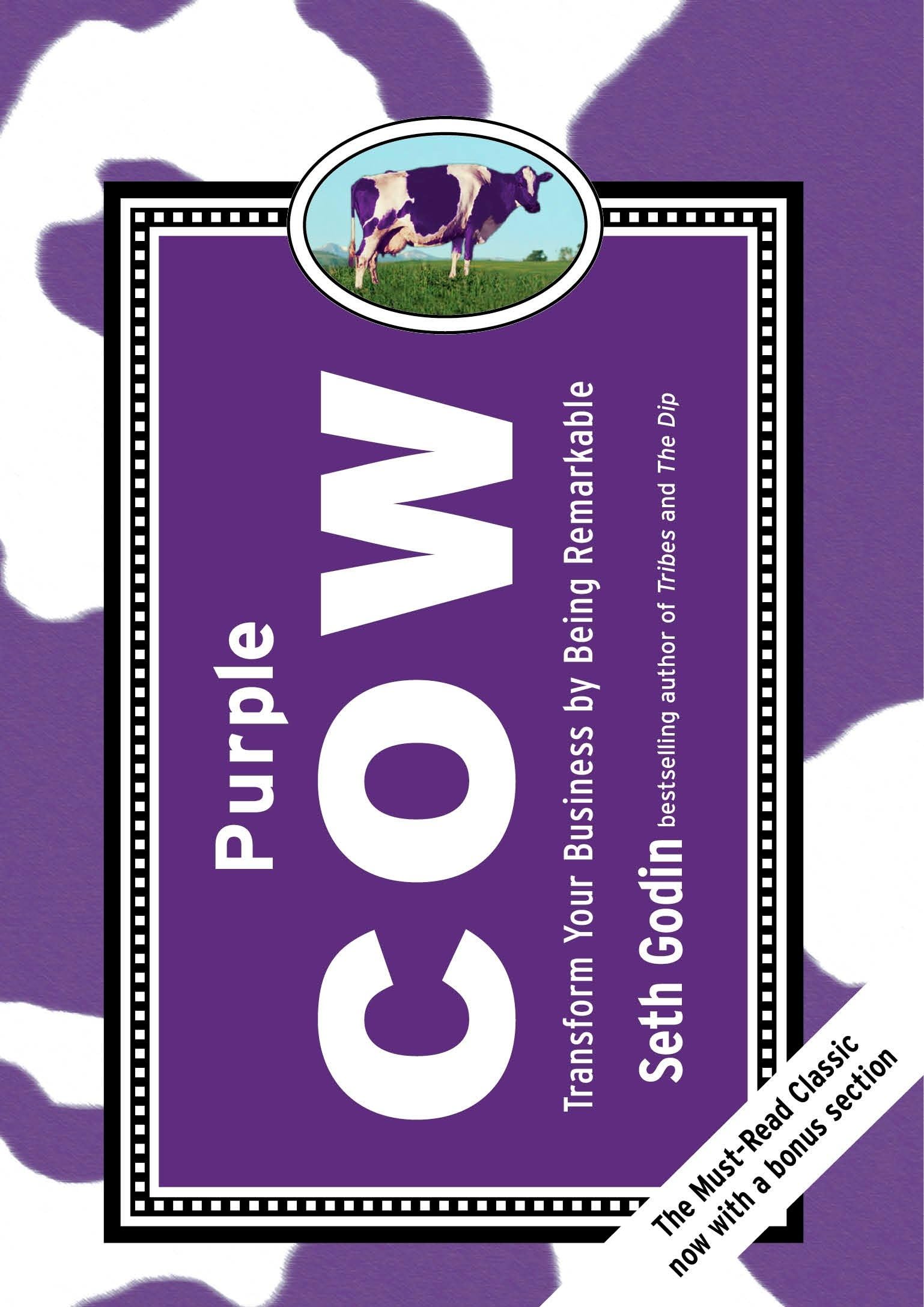
Seth Godin's central image is driving past field after field of brown cows — they are all invisible because they are all the same. A purple cow, by contrast, is remarkable: you would stop, stare and tell people about it. Godin argues that in a crowded marketplace the safest strategy is to be remarkable, because average products for average people no longer break through the noise. Marketing is no longer something you bolt on at the end; it has to be built into the product itself. The book is a manifesto against bland, risk-averse marketing. Godin shows that remarkable products spread through "sneezers" — early adopters who love telling others — and that trying to appeal to everyone guarantees you appeal to no one. For B2B this means building offerings and positioning so distinctive that your ideal customers cannot help talking about you. It is the mindset behind how we help tenants find their own "purple cow" in otherwise commoditised markets.

What’s unique: It reframes remarkability as the core marketing strategy rather than a creative garnish, and shows that being safe and average is now the riskiest position of all.

Read more
$100M Offers cover

$100M Offers

Alex Hormozi (2021)

Alex Hormozi tackles the single highest-leverage question in business: how do you make an offer so good that people feel stupid saying no? Rather than competing on price, he teaches you to construct a "Grand Slam Offer" that is so differentiated and valuable it removes the comparison entirely. The core tool is the Value Equation — increase the dream outcome and the perceived likelihood of achieving it, while decreasing the time delay and the effort and sacrifice required. Hormozi then layers on pricing psychology, scarcity, urgency, guarantees and bonuses to stack perceived value far above price. The book is intensely practical, full of worked examples from his own businesses. For B2B marketers it reframes the whole game: most companies have a weak offer wrapped in heavy marketing, when they should fix the offer first. It underpins the "offer" thinking we build into each tenant's positioning.

What’s unique: It gives a concrete, almost mathematical framework (the Value Equation) for engineering an irresistible offer, instead of treating offers as a matter of intuition or discounting.

Read more
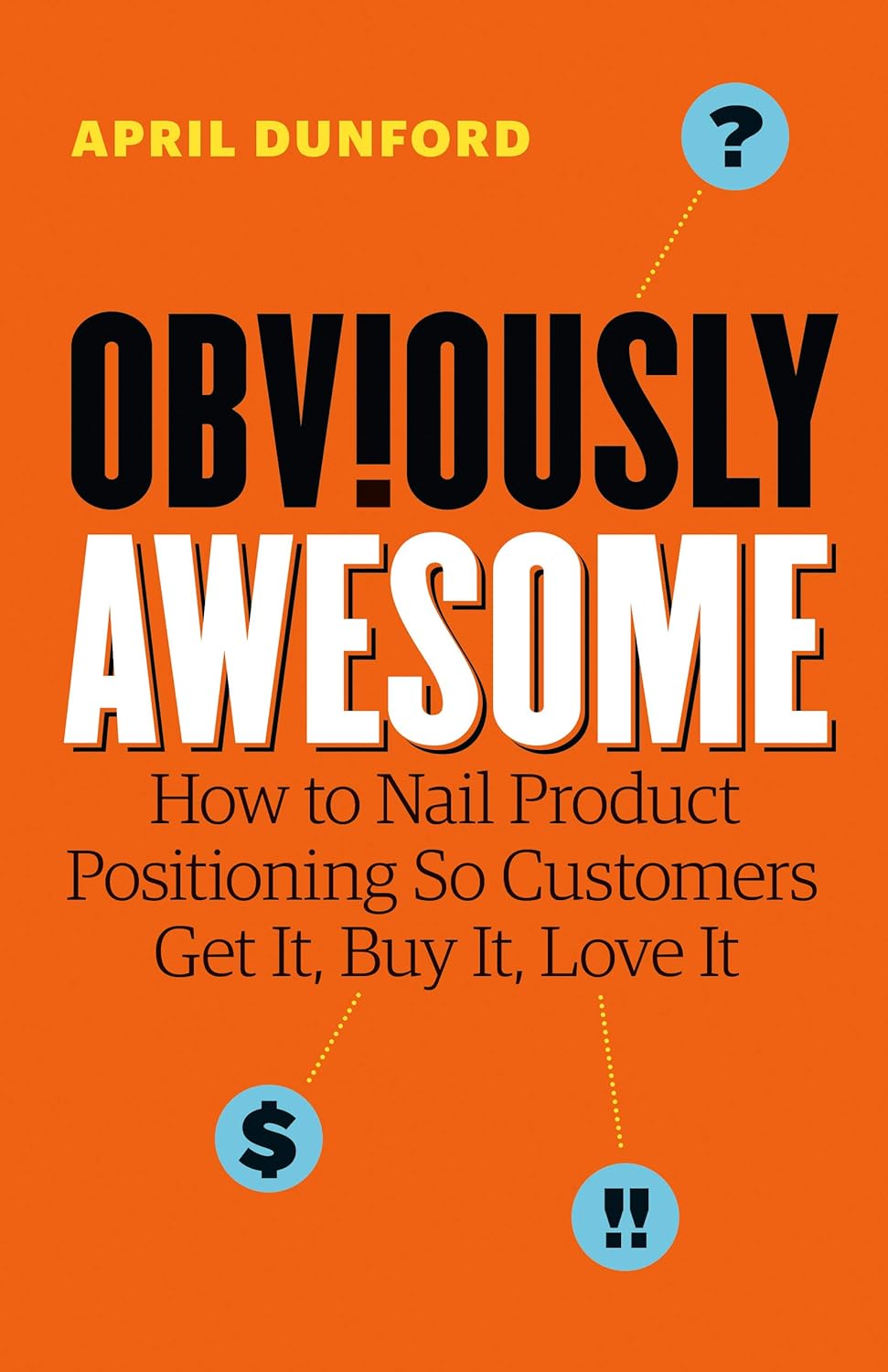
Obviously Awesome cover

Obviously Awesome

April Dunford (2019)

April Dunford argues that positioning — the act of defining how your product is the best in the world at delivering something a well-defined set of customers cares about — is the most under-appreciated lever in marketing. Products fail not because they are bad but because customers cannot figure out what they are, who they are for, and why they matter. Dunford provides a practical, repeatable methodology for finding the context in which your product obviously makes sense. Her ten-step process starts with identifying your best customers, listing your true competitive alternatives, isolating the unique attributes only you have, and mapping those to the value customers actually want. She then shows how to pick a market frame of reference that makes your strengths obvious. For B2B companies in crowded or novel categories, this book is the antidote to vague, me-too messaging — it is the positioning discipline we apply before any campaign.

What’s unique: It treats positioning as a deliberate, teachable process with concrete steps, rather than an abstract branding exercise, and emphasises choosing the right market context to make your value self-evident.

Read more
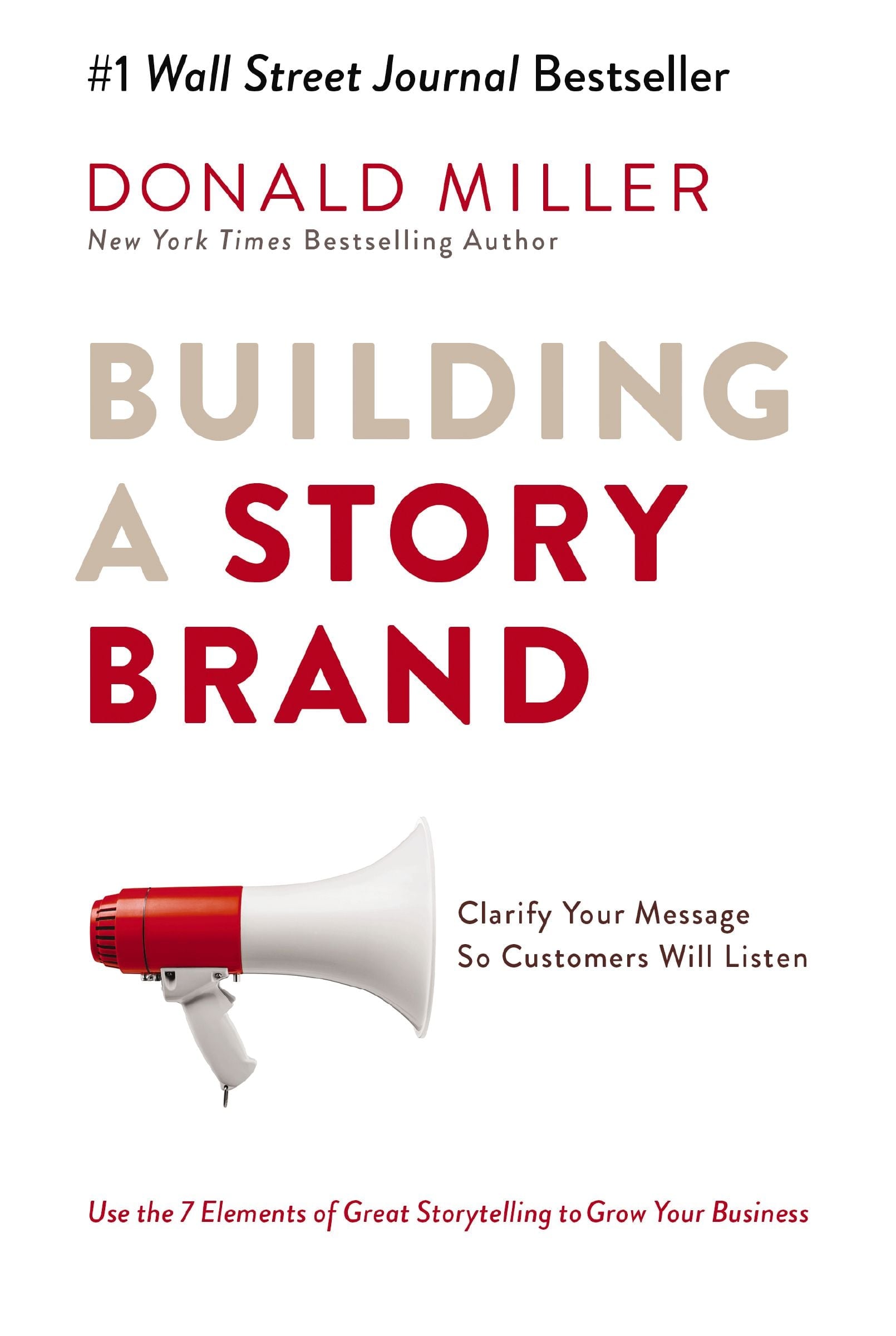
Building a StoryBrand cover

Building a StoryBrand

Donald Miller (2017)

Donald Miller applies the structure of classic storytelling to marketing messages. His key insight is that the customer — not the company — must be the hero of the story, and the brand should play the role of the guide (think Yoda, not Luke). Using a seven-part framework called the StoryBrand SB7, he shows how to clarify your message so customers instantly understand how you help them survive and thrive. The framework runs: a Character (the customer) has a Problem, meets a Guide (your brand) who gives them a Plan and Calls them to action, which helps them avoid Failure and ends in Success. Miller's argument is that confused buyers don't buy — if people have to burn mental calories to understand you, you lose them. For B2B websites, emails and sales decks, StoryBrand is a reliable template for cutting jargon and making the customer feel understood.

What’s unique: It turns narrative theory into a plug-and-play seven-part messaging framework, and insists the customer (not the brand) is the hero — a subtle shift that transforms copy.

Read more
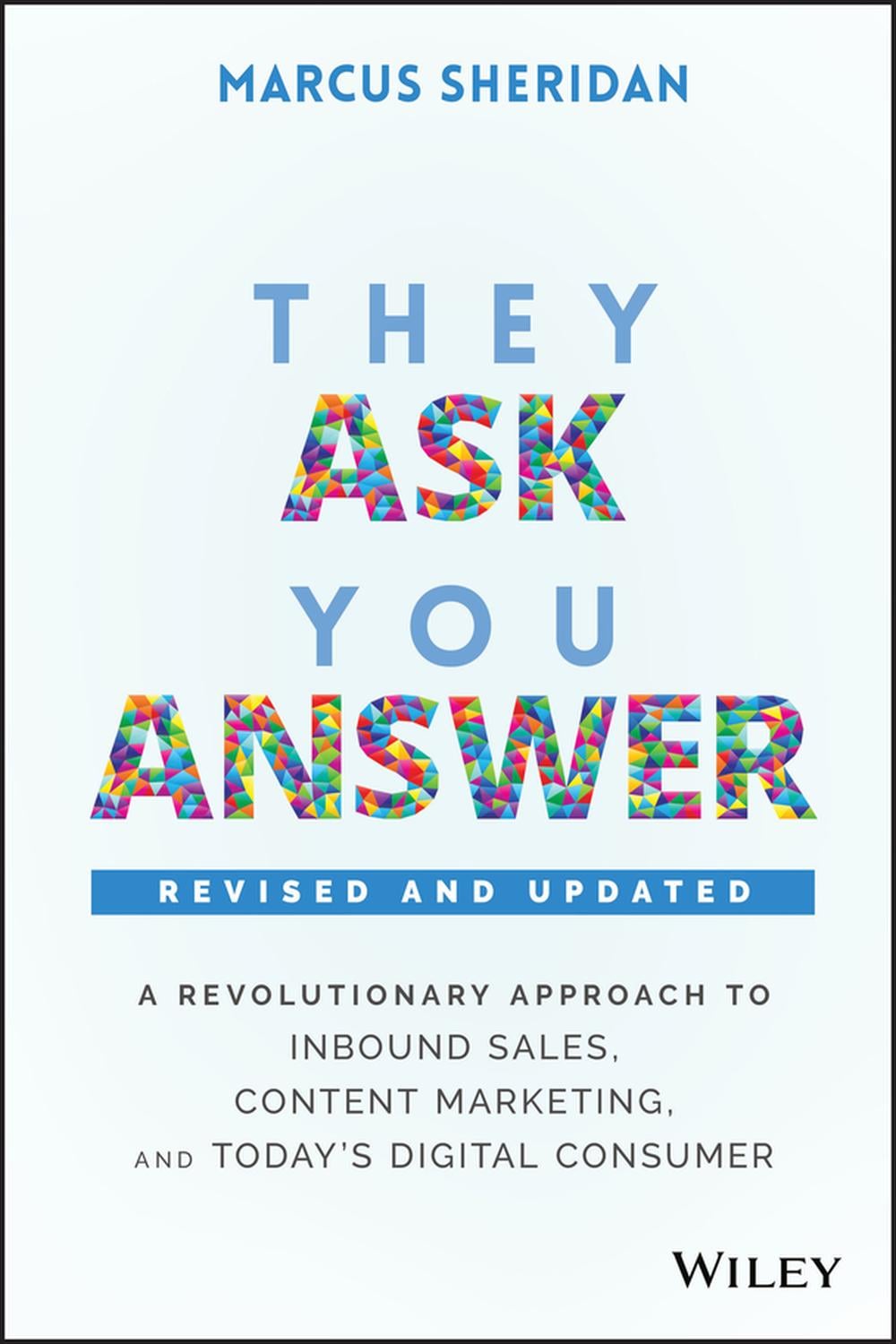
They Ask, You Answer cover

They Ask, You Answer

Marcus Sheridan (2017)

Marcus Sheridan saved his pool company during the 2008 crash by doing something radical: answering, in honest detail, every question his customers asked — including the ones most businesses avoid, like pricing, problems and comparisons with competitors. He argues that modern buyers do the majority of their research online before ever talking to sales, so the company that most openly and thoroughly answers their questions earns trust and wins the deal. The book lays out the "Big 5" topics that drive the most traffic and trust: cost and price, problems, comparisons, reviews, and "best of" lists. Sheridan shows how content marketing, when driven by genuine customer questions, becomes a sales engine rather than fluff. For B2B, this is the philosophy behind using educational content and SEO to become the most trusted voice in your category — exactly why this portal pairs book summaries with a content and newsletter engine.

What’s unique: It makes radical transparency — openly covering price, problems and competitors — the centrepiece of content strategy, and ties content directly to sales outcomes.

Read more
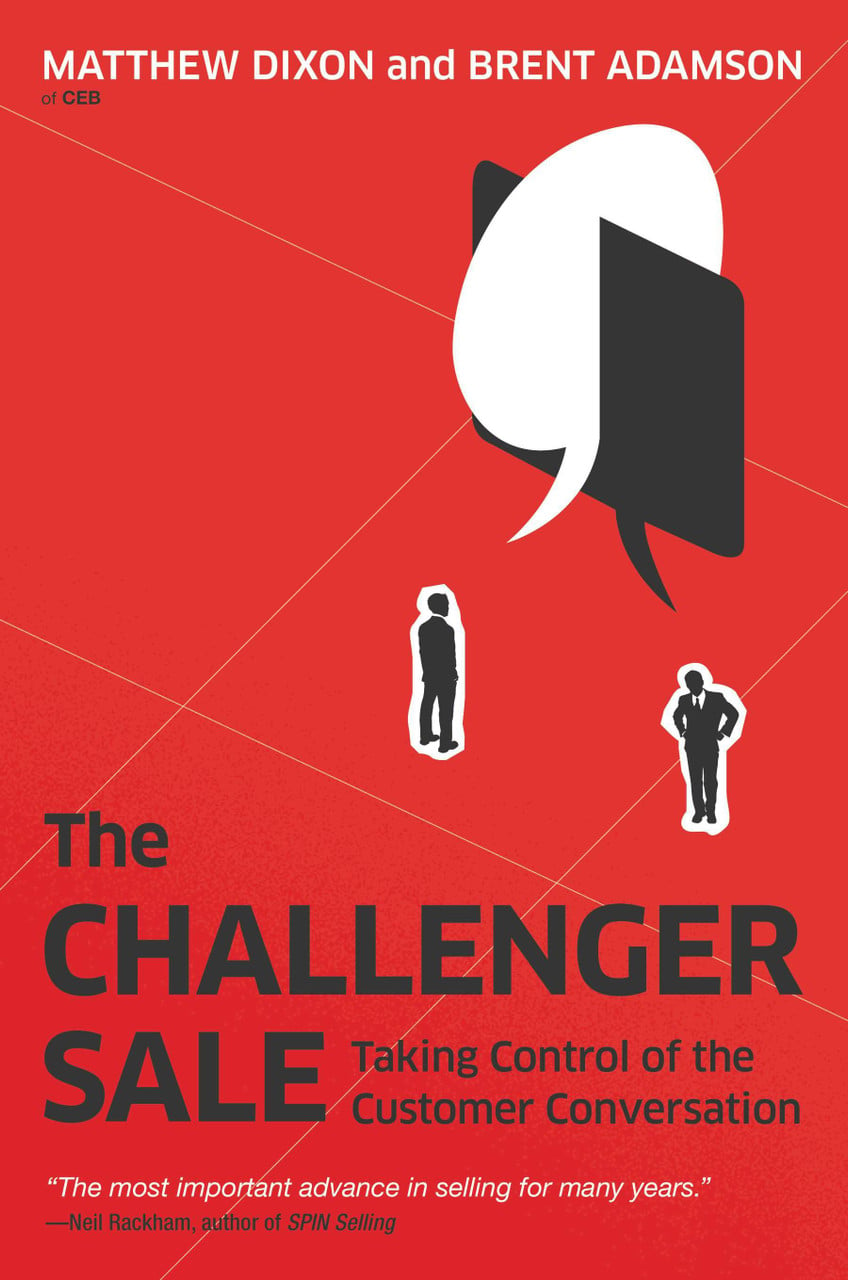
The Challenger Sale cover

The Challenger Sale

Matthew Dixon & Brent Adamson (2011)

Based on a large study of thousands of B2B sales reps, Dixon and Adamson found that the best performers were not the relationship-builders everyone assumed, but "Challengers" — reps who teach customers something new about their business, tailor the message to the customer, and take control of the sale. Challengers win by reframing how the customer thinks about their problem, offering commercial insight the customer could not easily get elsewhere. The book dismantles the comfortable belief that strong relationships close deals, showing instead that in complex B2B sales customers value suppliers who bring provocative, valuable ideas. The implication for marketing is profound: content and messaging should lead with insight that challenges the buyer's status quo, not generic product benefits. It is why our approach favours teaching-led, insight-driven marketing over feature lists.

What’s unique: It overturns the relationship-selling orthodoxy with hard data, proving that teaching and constructively challenging customers outperforms simply building rapport.

Read more
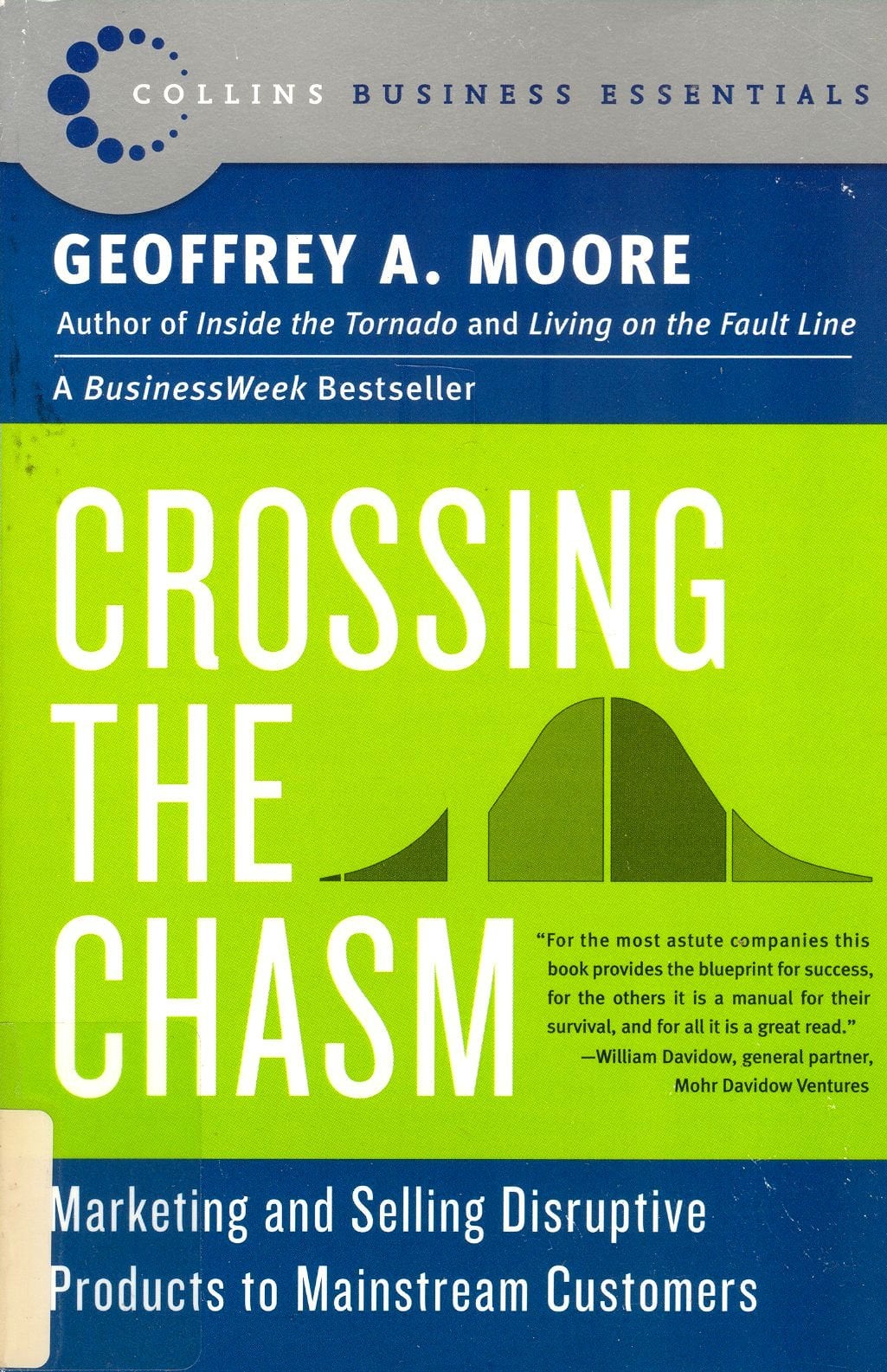
Crossing the Chasm cover

Crossing the Chasm

Geoffrey A. Moore (1991)

Geoffrey Moore's classic explains why so many innovative products win early enthusiasts yet fail to reach the mainstream. Between the visionary early adopters and the pragmatic early majority lies a "chasm" — and the two groups buy for completely different reasons. Early adopters want a breakthrough; the mainstream wants a safe, complete, proven solution. Products die in the chasm when companies assume momentum will simply carry them across. Moore's prescription is to cross the chasm by targeting a single beachhead niche, dominating it completely with a "whole product" that solves the pragmatist's entire problem, and using that foothold to expand. For B2B technology and innovation-led companies, this book is essential for sequencing go-to-market: focus narrowly, win a reference segment, then widen. It reinforces the niche-first discipline we apply to tenant positioning.

What’s unique: It identifies the specific psychological gap between early adopters and the pragmatic majority, and gives a beachhead strategy for crossing it — a lens almost every tech go-to-market still uses.

Read more
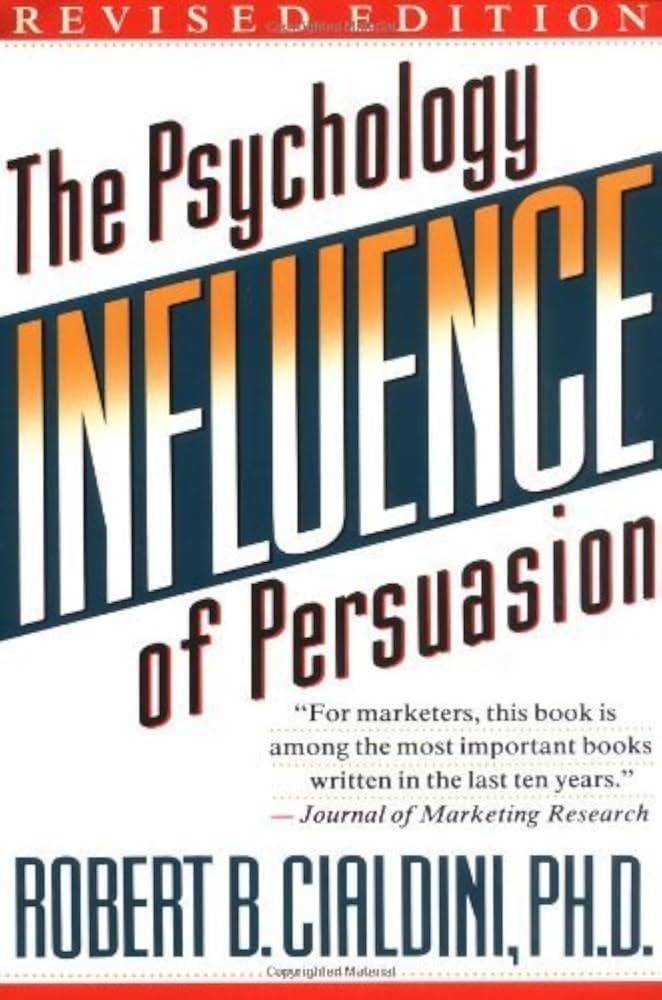
Influence: The Psychology of Persuasion cover

Influence: The Psychology of Persuasion

Robert B. Cialdini (1984)

Robert Cialdini distilled decades of research into six universal principles that drive human beings to say yes: reciprocity, commitment and consistency, social proof, authority, liking, and scarcity. Each principle is a mental shortcut people use to make decisions quickly, and each can be used ethically to make genuinely good offers more persuasive — or abused by manipulators, which is why Cialdini also teaches you to defend against them. The book is grounded in field experiments and real-world examples, making it one of the most practical and widely cited works in all of marketing and behavioural science. For B2B marketers, the principles explain why testimonials (social proof), expert endorsements (authority), free value (reciprocity) and genuine scarcity move buyers. It is the behavioural foundation beneath persuasive copy, landing pages and nurture sequences.

What’s unique: It identifies six research-backed, universal persuasion principles that apply across every culture and context, and pairs each with ethical guidance and defences against misuse.

Read more
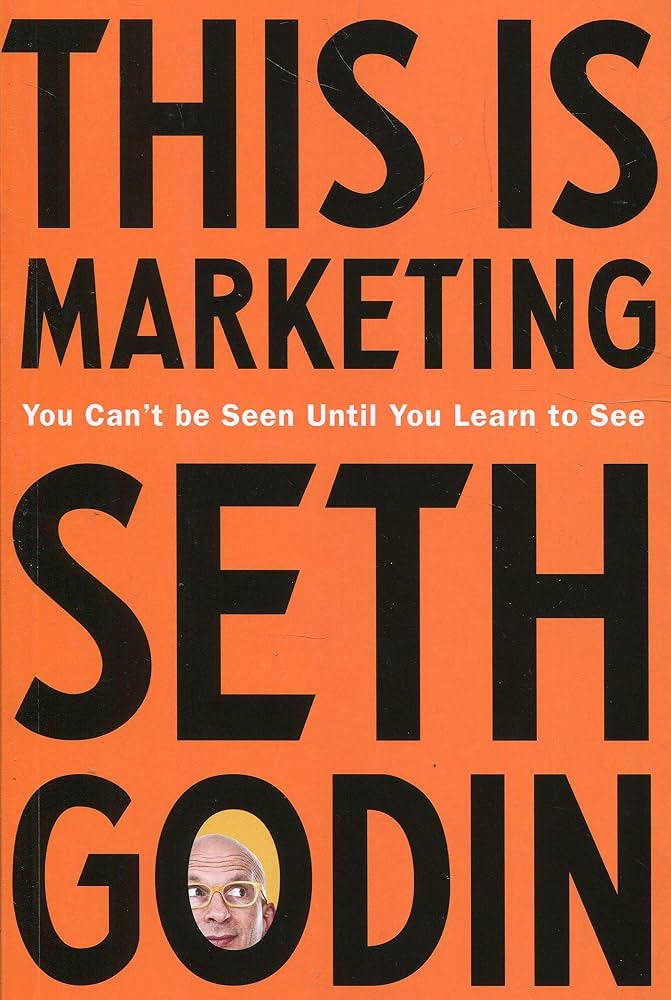
This Is Marketing cover

This Is Marketing

Seth Godin (2018)

In This Is Marketing, Seth Godin presents a modern, generous philosophy of the discipline: marketing is not about shouting at the masses or tricking people into buying, but about making change happen for a specific group of people you seek to serve. Great marketers find their "smallest viable audience," understand their worldview and desires, and build products and stories that help those people become who they want to be. Godin weaves together positioning, empathy, status, tension and trust into a coherent worldview. Rather than chasing everyone with mass advertising, you earn permission and attention by consistently showing up for a defined tribe. For B2B, the book is a reminder that durable growth comes from deeply serving a specific segment and earning their trust over time — the ethos behind the niche, permission-based approach we build into each tenant's plan.

What’s unique: It reframes marketing as empathetic, permission-based service to a "smallest viable audience" rather than mass persuasion, uniting many ideas into one humane philosophy.

Read more
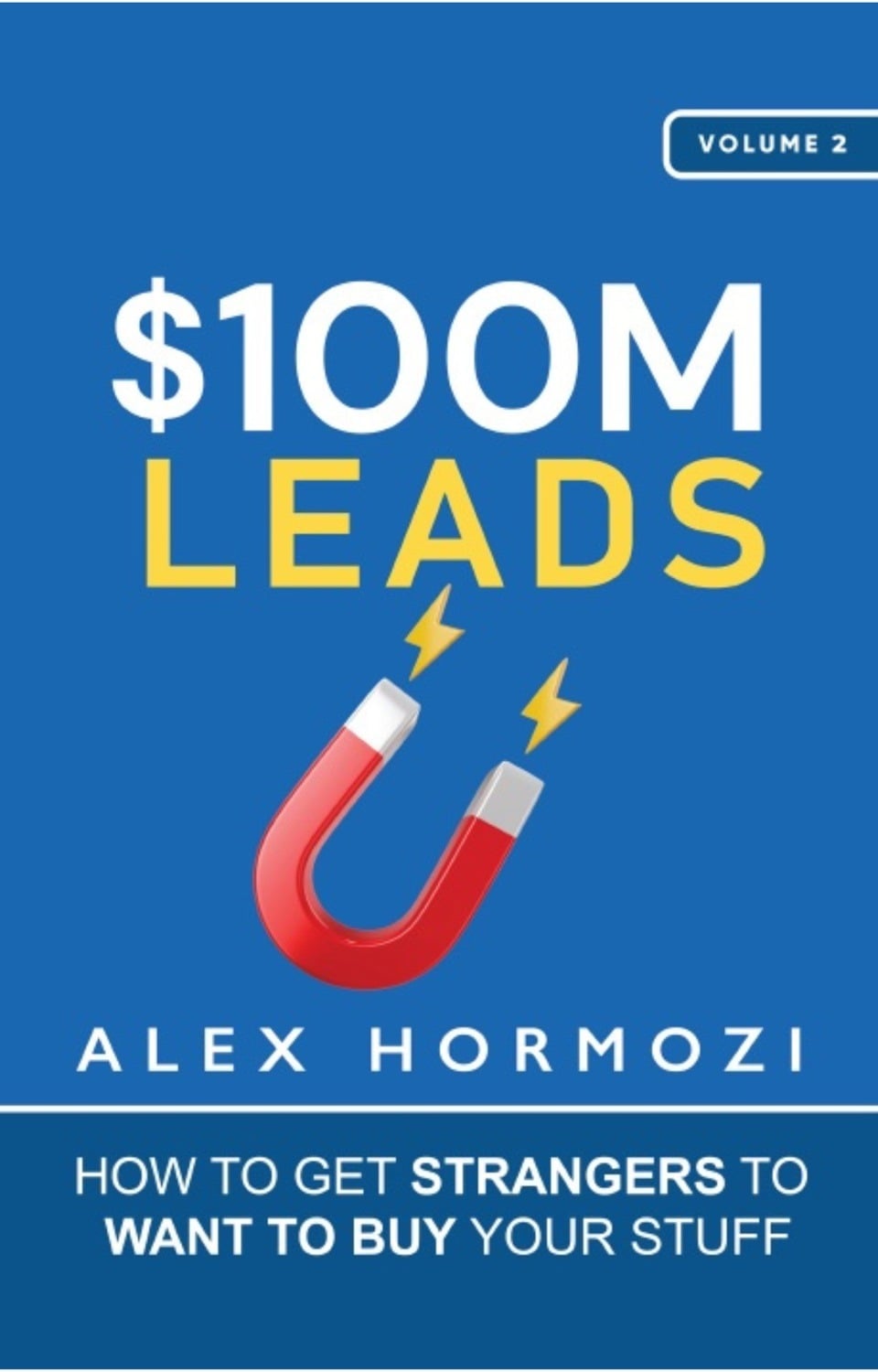
$100M Leads cover

$100M Leads

Alex Hormozi (2023)

In $100M Leads, Alex Hormozi tackles the question every business eventually hits: how do you get strangers to want to buy from you, reliably and at scale? He defines a lead not as any contact but as an "engaged" lead — someone who has shown they are interested — and argues that the real skill is turning cold attention into engaged leads predictably. The book organises lead generation into what he calls the Core Four: warm outreach, posting content, cold outreach and paid ads, plus the force-multiplier of getting other people (customers, employees, agencies and affiliates) to generate leads for you. Hormozi's gift is turning a fuzzy topic into a concrete, do-this-next playbook, complete with the "give until they ask" lead-magnet method for converting attention into interest. For B2B teams the framework maps almost directly onto outbound email, LinkedIn, referral programmes and partner channels — the same channels this portal helps each tenant run. It reframes lead generation from a mysterious art into an operational system you can staff, measure and scale.

What’s unique: It reduces all of lead generation to four repeatable channels plus four "lead getters," and gives a step-by-step lead-magnet method — making a traditionally vague topic feel like an operating manual.

Read more
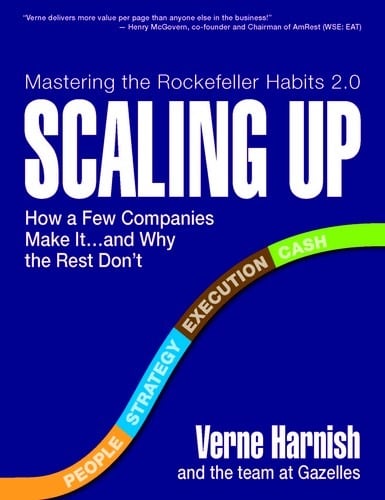
Scaling Up cover

Scaling Up

Verne Harnish (2014)

Verne Harnish's Scaling Up (Mastering the Rockefeller Habits 2.0) is a practical operating system for growing a company without it descending into chaos. Harnish organises the work of scaling around four decisions every business must get right: People, Strategy, Execution and Cash. Get the right people doing the right things, craft a strategy that drives sustainable growth, build the execution discipline (rhythms, priorities and metrics) to deliver it, and ensure you have the cash to fuel it all. The book is full of one-page tools — the One-Page Strategic Plan, the quarterly "rocks," daily huddles and a core set of KPIs — that turn big ambitions into weekly behaviour. For B2B leaders it is less a marketing book than the management backbone that lets marketing, sales and operations pull in the same direction, which is exactly the kind of cross-functional alignment this portal is designed to support across each tenant's growth plan.

What’s unique: It distills company growth into four decisions — People, Strategy, Execution, Cash — and backs each with simple one-page tools and meeting rhythms you can install immediately.

Read more
Who Not How cover

Who Not How

Dan Sullivan & Benjamin Hardy (2020)

Who Not How argues that the biggest constraint on growth is a simple mental habit: when we face a goal, we instinctively ask "How do I do this?" Dan Sullivan and Benjamin Hardy urge a different first question — "Who can do this for me?" By finding the right person (or team) to own a result, you free your time, energy and focus for the things only you can do, and you achieve far more than willpower and self-reliance ever allow. The book reframes delegation not as offloading tasks but as pursuing bigger goals through collaboration, and it dismantles the perfectionism and control that keep founders stuck. For B2B owners and marketers, the lesson is direct: hiring specialists, agencies or platforms to own outcomes — rather than learning every channel yourself — is how you scale. It is the mindset behind letting a system like this portal (and the right people around it) handle the "how" while you set direction.

What’s unique: It turns delegation into a single habit-changing question — "who, not how" — and frames bringing in the right people as the primary engine of growth and freedom.

Read more
The Greatest Salesman in the World cover

The Greatest Salesman in the World

Og Mandino (1968)

Og Mandino's classic is a parable rather than a manual: the story of Hafid, a poor camel boy who becomes the greatest salesman in the world by living according to ten ancient scrolls. Each scroll contains a principle — persistence, love, mastering emotions, valuing each day, acting now — that the reader is told to internalise through disciplined, repeated reading over thirty days. The real subject is not selling techniques but the character and daily habits that make someone trustworthy, resilient and effective. The book's enduring power is its insistence that success comes from habits formed one day at a time, and that how you treat people — "I will greet this day with love in my heart" — is itself a commercial advantage. For B2B professionals, where trust and long relationships decide deals, Mandino's emphasis on persistence, empathy and consistent action is a reminder that the human behind the pipeline matters as much as the tools — the values side of the growth engine this portal supports.

What’s unique: It teaches selling through a memorable parable and ten habit-forming "scrolls," focusing on character, persistence and love rather than tactics or scripts.

Read more
The 22 Immutable Laws of Marketing cover

The 22 Immutable Laws of Marketing

Al Ries & Jack Trout (1993)

Al Ries and Jack Trout distil decades of marketing wisdom into twenty-two blunt "laws" that, they argue, you violate at your peril. The most famous is the Law of Leadership — it is better to be first than to be better — followed by the Law of the Category (if you can't be first, create a category you can be first in) and the Law of the Mind (being first in the customer's mind beats being first in the market). Running through all of them is the primacy of perception and focus over product features. The book is deliberately provocative and concise, each law a short chapter with vivid examples of winners and losers. Its core message — own a single word or position in the prospect's mind, and do not dilute it — is the foundation of modern positioning. For B2B companies fighting in crowded categories, these laws are a checklist for sharpening focus and avoiding the line-extension and me-too traps, the same positioning discipline this portal applies before any campaign.

What’s unique: It frames marketing as a set of unbreakable "laws" centred on perception, category and focus, delivered as memorable, example-driven rules rather than theory.

Read more
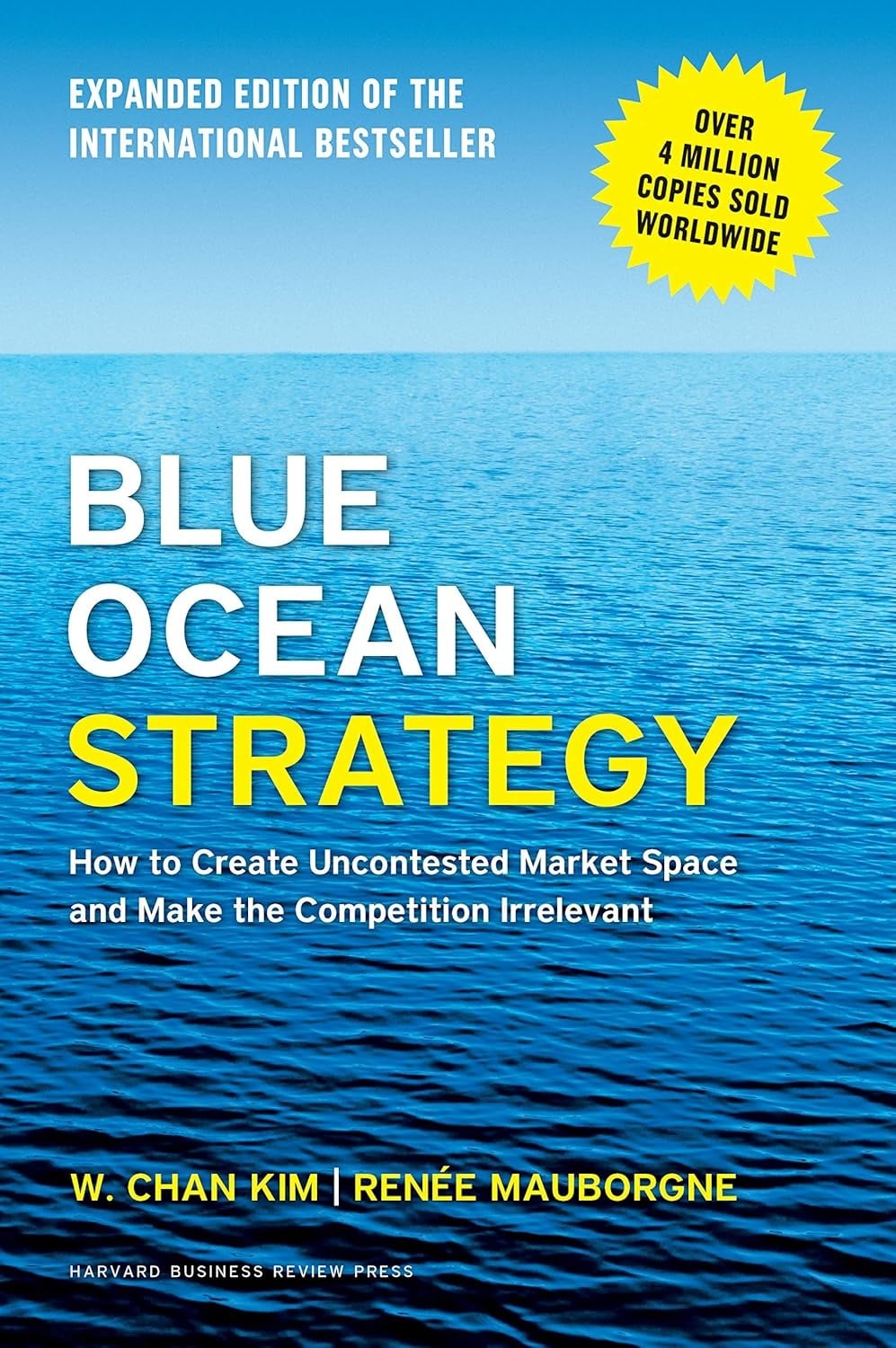
Blue Ocean Strategy cover

Blue Ocean Strategy

W. Chan Kim & Renée Mauborgne (2005)

Kim and Mauborgne divide markets into "red oceans" — existing industries where competitors fight over the same demand until the water turns bloody — and "blue oceans," uncontested market space created by making the competition irrelevant. Instead of out-competing rivals on the same terms, blue ocean strategy is about redefining the terms: creating new demand through a leap in value for buyers while simultaneously lowering costs. The book supplies concrete tools — the Strategy Canvas, the Four Actions Framework (eliminate, reduce, raise, create) and the "value innovation" concept — for systematically finding that new space. It is grounded in a large study of strategic moves across many industries. For B2B companies trapped in commoditised, price-driven categories, blue ocean thinking offers a disciplined way to escape the race to the bottom and build a differentiated position — the kind of distinctive value proposition this portal helps each tenant define.

What’s unique: It gives a structured method — Strategy Canvas and the Four Actions Framework — for creating uncontested market space rather than competing head-on in crowded ones.

Read more
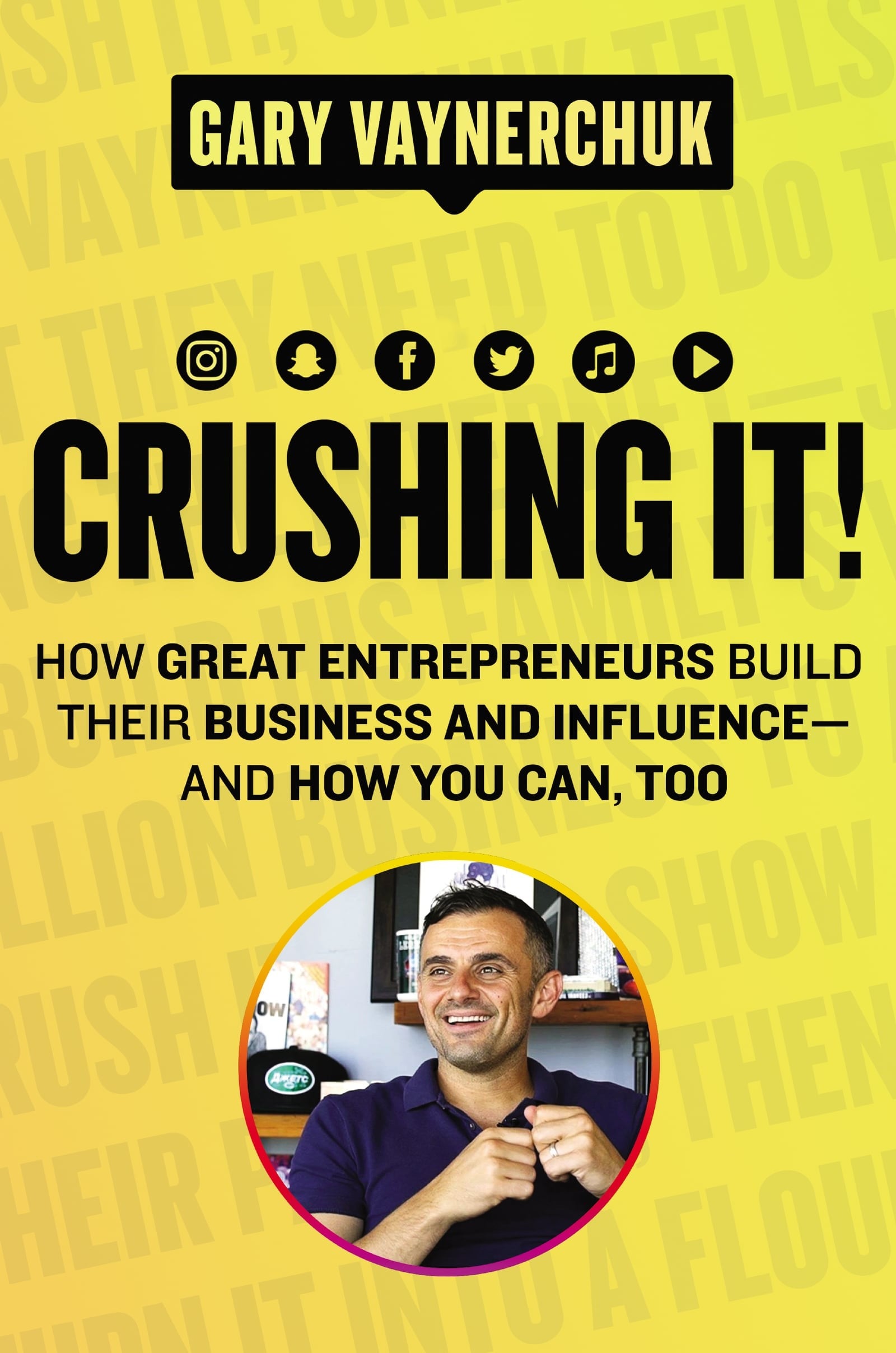
Crushing It! cover

Crushing It!

Gary Vaynerchuk (2018)

In Crushing It!, Gary Vaynerchuk makes the case that personal brand is the single greatest business opportunity of the social-media era, and that anyone willing to document their work and serve an audience authentically can build a thriving business around it. Part manifesto, part practical guide, the book walks through every major platform — from Instagram and YouTube to podcasts and LinkedIn — explaining how each works and how to show up consistently with genuine value. Vaynerchuk reinforces the argument with real stories of people who built businesses on these principles, emphasising patience, authenticity and relentless content output over quick-win hacks. For B2B founders and marketers, the takeaways translate directly into thought-leadership content, founder-led LinkedIn presence and multi-channel distribution — the content engine this portal pairs with each tenant's campaigns to build trust at scale.

What’s unique: It is a platform-by-platform playbook for building a personal brand, grounded in authenticity and consistency rather than growth hacks, with real practitioner stories.

Read more
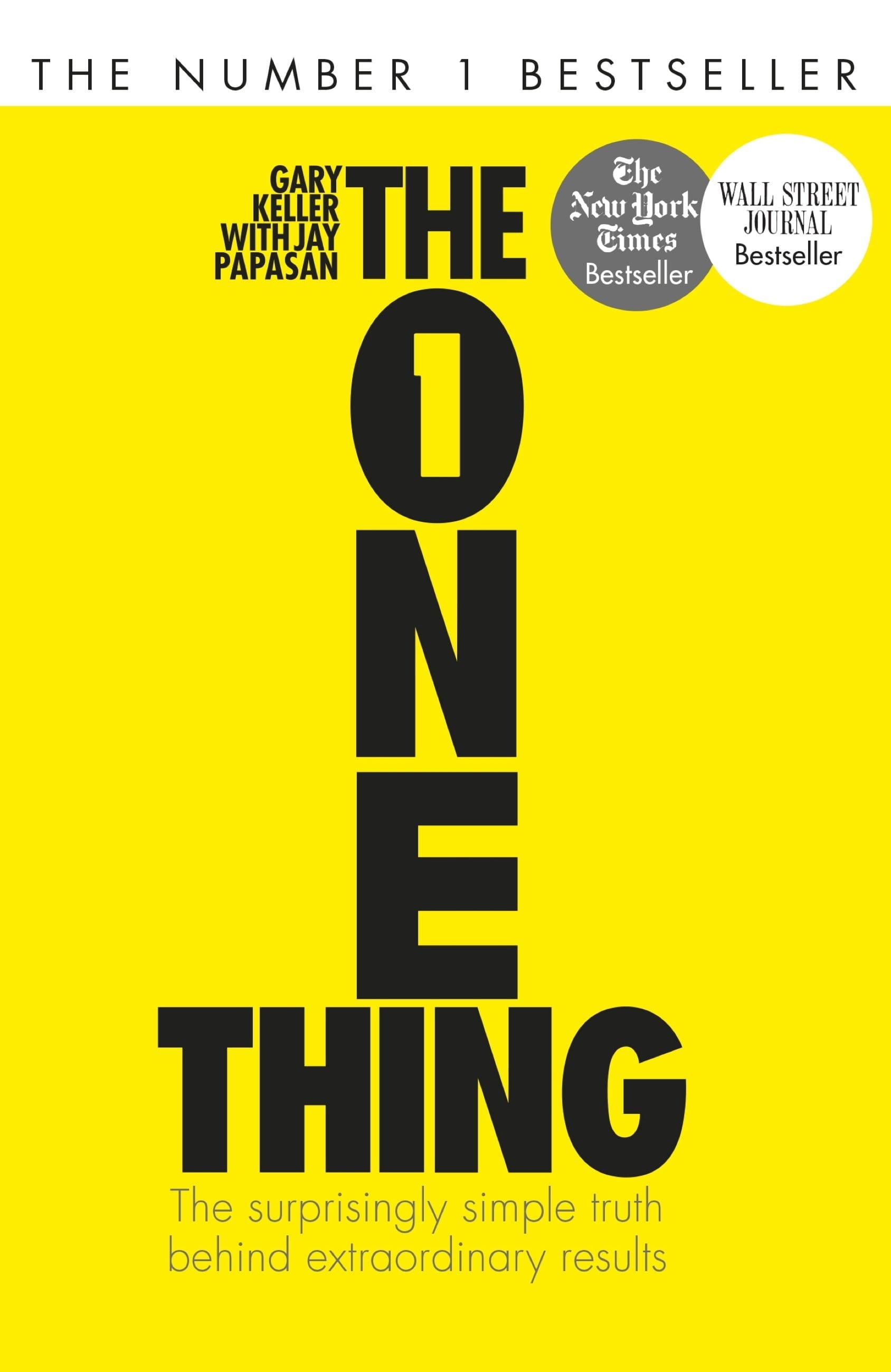
The ONE Thing cover

The ONE Thing

Gary Keller & Jay Papasan (2013)

Gary Keller and Jay Papasan argue that extraordinary results come not from doing more, but from doing less — specifically, from identifying and relentlessly protecting the single most important task that makes everything else easier or unnecessary. Their Focusing Question — "What's the ONE Thing I can do such that by doing it everything else will be easier or unnecessary?" — is a tool for cutting through busyness to true priorities. The book debunks popular myths (multitasking, the balanced life, willpower on demand) and shows how time-blocking the ONE Thing each day, and building a goal chain from someday down to right now, produces compounding results. For B2B teams drowning in channels, tactics and dashboards, the discipline of sequencing priorities and protecting focused time is exactly what turns a sprawling marketing plan into real progress — the clarity this portal aims to give each tenant.

What’s unique: It reframes productivity around a single Focusing Question and daily time-blocking for one dominant priority, rejecting multitasking and to-do-list sprawl.

Read more
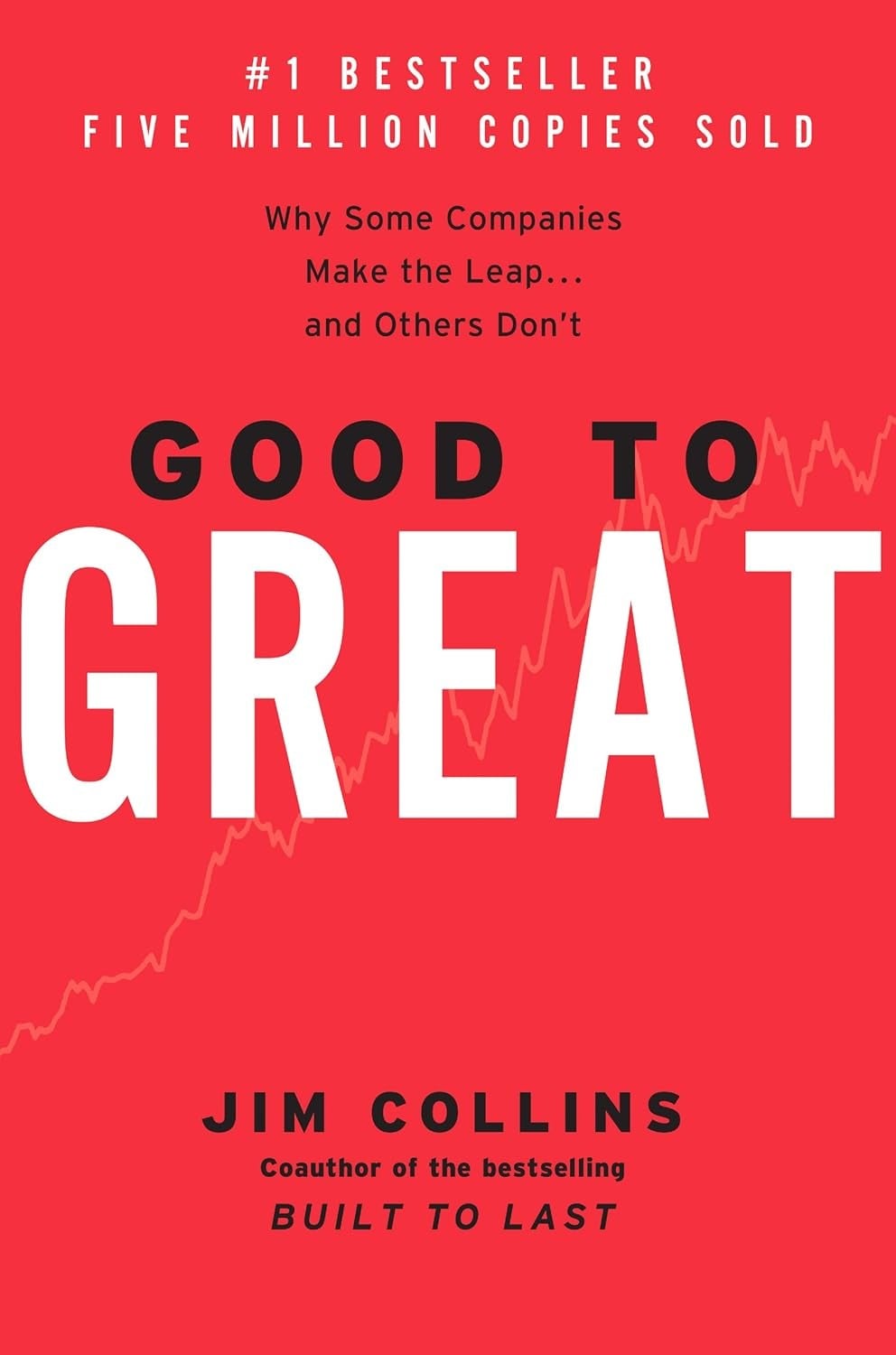
Good to Great cover

Good to Great

Jim Collins (2001)

Jim Collins and his research team studied companies that made the leap from good to genuinely great — sustained, market-beating results over fifteen years — and compared them with peers that did not. The patterns they found became enduring management concepts: Level 5 Leadership (humble but fiercely determined leaders), "first who, then what" (get the right people on the bus first), the Hedgehog Concept (the intersection of what you're passionate about, what you can be best in the world at, and what drives your economic engine), and the Flywheel of compounding, disciplined effort. The book's strength is that its conclusions are drawn from rigorous comparison rather than opinion. For B2B leaders, the lessons shape not campaigns but the organisation behind them: disciplined people, disciplined thought and disciplined action, confronting brutal facts while keeping faith in the end goal. It is the long-term strategic backbone that makes consistent marketing — like the systems in this portal — actually compound.

What’s unique: Its frameworks — Level 5 Leadership, the Hedgehog Concept and the Flywheel — come from a rigorous matched-pair study, giving them unusual empirical weight.

Read more
The Copy Book cover

The Copy Book

D&AD (2011)

The Copy Book, published by D&AD and TASCHEN, is a masterclass in the craft of advertising copywriting, bringing together essays and work from thirty-two of the world's most celebrated copywriters — names like David Abbott, Steve Hayden, Dan Wieden and Neil French. Rather than offering a single theory, it lets the best practitioners explain, in their own words, how they think about ideas, headlines, structure, tone and the discipline of writing words that sell. The recurring themes are timeless: respect the reader, have a genuine idea before you polish the words, write the way people speak, and cut everything that doesn't earn its place. For B2B marketers, where clear persuasive writing drives emails, landing pages, ads and proposals, the book is a reference for raising the quality of every word that represents your brand — the craft layer that makes the content engine in this portal actually convert.

What’s unique: It is not one author's theory but a curated anthology of the greatest copywriters explaining their own craft, making it a timeless reference rather than a method.

Read more
Marketing Management (16th edition) cover

Marketing Management (16th edition)

Philip Kotler, Kevin Lane Keller & Alexander Chernev (2022)

Often called the "bible of marketing," Marketing Management by Kotler, Keller and Chernev is the definitive graduate-level text on the discipline, now in its sixteenth edition. It provides a comprehensive, structured framework covering the whole of marketing: analysing markets and customer behaviour, segmentation, targeting and positioning, building brands, designing products and services, pricing, channels, integrated marketing communications, and measuring performance — all updated for the digital, data-driven and socially conscious marketplace. What sets it apart is its rigor and completeness: it is both a teaching text and a lifelong reference, grounding every modern tactic in sound strategic theory. For B2B leaders, it supplies the shared vocabulary and end-to-end model — from market analysis to the marketing mix to metrics — that keeps strategy coherent as channels multiply. It is the academic foundation beneath the practical frameworks this portal operationalises for each tenant.

What’s unique: It is the comprehensive, authoritative reference for the entire field — rigorously connecting strategy, customer analysis, the marketing mix and metrics in one structured model.

Read more
Marketing 6.0: The Future Is Immersive cover

Marketing 6.0: The Future Is Immersive

Philip Kotler, Hermawan Kartajaya & Iwan Setiawan (2023)

In Marketing 6.0, Kotler, Kartajaya and Setiawan argue that marketing is entering an "immersive" era in which the line between physical and digital experience dissolves. Building on their earlier Marketing 4.0 (digital) and 5.0 (technology for humanity), they explore how technologies like the metaverse, extended reality, the Internet of Things, spatial computing and AI are creating blended, multisensory customer experiences — and what brands must do to meet customers in them. The book combines big-picture vision with practical guidance: understanding the two generations driving this shift (Gen Z and Gen Alpha), building the enabling infrastructure and experiences, and designing immersive touchpoints across physical and virtual space. For B2B marketers, it is a forward-looking map of where customer engagement is heading — a reminder to pair today's channels with emerging, experience-led ones. It frames the horizon this portal keeps each tenant ready for as marketing technology evolves.

What’s unique: It defines the emerging "immersive" phase of marketing — merging physical and digital via metaverse, XR, IoT and AI — and connects it to the generations and infrastructure that enable it.

Read more

Want these ideas applied to your business?

We turn these frameworks into a working marketing engine — positioning, offers, and a plan that runs every channel.

Book a demo